Regret Hanoi's 'Must-Dos'? Ditch Crowds, Unearth Local Gems for Pennies!
- Quick Tags: Hanoi budget travel, Vietnam hidden gems, Avoid Hanoi tourist traps, Niche travel Vietnam
- Editor: Chloe Jones
- Updated: Sep,23,2026
- Views: 387.6k









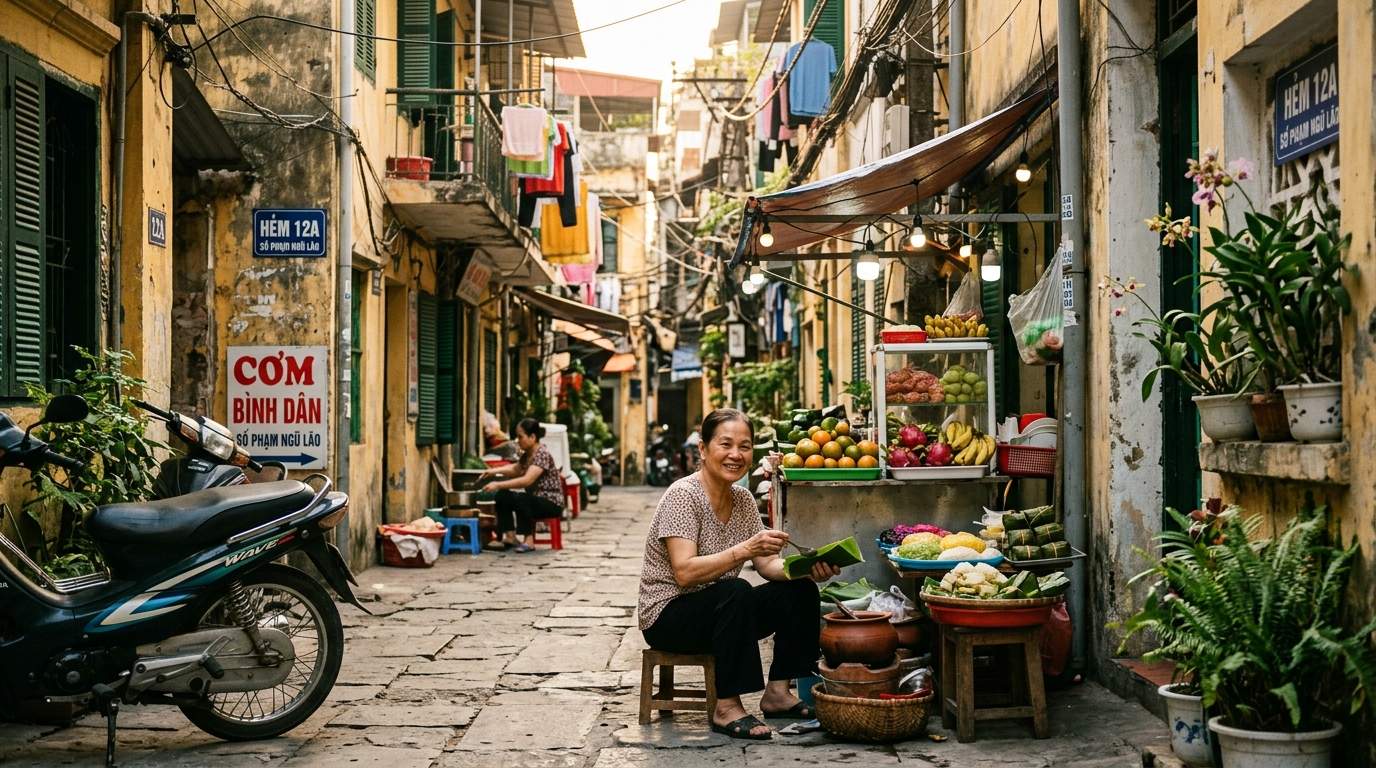
The late afternoon sun was beginning to soften the edges of Hanoi's Old Quarter, casting long shadows across the narrow, vibrant streets. I remember ducking into a tiny, almost invisible doorway, escaping the cacophony of motorbikes and street hawkers, and finding myself in a surprisingly tranquil courtyard. The air here smelled of old wood and brewing tea, a stark contrast to the exhaust fumes outside. A grandmother, her face a map of kindness, smiled from behind a small stall selling sticky rice cakes. This wasn’t on any "Top 10 Things to Do" list, and that, my friends, was exactly the point. Because while Hanoi is a city that screams for attention, its true magic whispers from its quiet corners, often missed by those too busy ticking off Instagram hotspots.
My first brush with Hanoi was a chaotic symphony of sights, sounds, and relentless honking. The initial urge is to dive headfirst into the famous spots: Hoan Kiem Lake, the Water Puppet Theatre, the notorious Train Street. But let's be real, a true budget-conscious, anti-tourist-trap traveler knows better. These places aren't inherently bad, but they often come with inflated prices, relentless touts, and crowds so thick you can barely breathe, let alone capture a moment. Our group – two girls who appreciate a good bargain and two boys perpetually hungry – quickly learned that the real adventure lay in veering off the well-trodden path. It’s about not just seeing Hanoi, but feeling it, without draining your wallet in the process.
Hanoi’s culinary scene is legendary, but there’s a chasm between "tourist-friendly" delicious and "local-approved" mind-blowingly good (and cheap). This is where our reverse-travel strategy truly shined.
Everyone flocks to the Bún Chả Hương Liên (yes, the Obama spot). And sure, it’s fine. But we paid a premium, queued for ages, and left feeling a little… underwhelmed by the fanfare. My buddy, a self-proclaimed food detective, dragged us deep into an alley the next day. No English menu, just a woman grilling pork patties over charcoal, fanning the smoke with a rhythmic grace. We pointed, she smiled, and within minutes, we had bowls of bún chả that made the previous day's experience feel like a bland dream. The cost? Roughly 35,000 VND (about $1.50) compared to the Obama spot's 85,000 VND. The flavor? Incomparable. "This," my friend declared, wiping his chin, "is what paying tourist prices robs you of." He wasn't wrong.
Egg coffee. Iconic. And you’ll find it everywhere. Café Giang is the famous one, and again, it's popular for a reason. But a short walk away, down a particularly unassuming lane, we found Cà Phê Lâm. This place felt like stepping back in time – worn wooden furniture, yellowed photographs, and a calm that Instagram queues simply can't offer. The egg coffee here was just as rich, just as velvety, and the price was a good 10-15,000 VND less than its more popular counterparts. Plus, we actually got to talk to the owner, who shared anecdotes about the cafe's history, a conversation I wouldn’t trade for a thousand perfectly filtered photos.
Beyond the well-worn paths, Hanoi holds some genuinely astonishing, often free, experiences.
Instead of battling the main streets, embrace the labyrinthine network of residential alleys. We'd simply pick a random narrow opening and see where it led. Here, life unfolds at a different pace. Kids playing badminton, families sharing meals on tiny plastic stools, makeshift barbershops, and hidden temples no bigger than a broom closet. These aren't "attractions" in the traditional sense, but they offer an unparalleled glimpse into authentic Hanoi life. We spent an entire afternoon exploring one such network, discovering a community courtyard where old men played chess under a banyan tree. It cost absolutely nothing and gave us more cultural insight than any paid tour.
Forget crowded tourist boats on the Red River. Head to the Long Biên Bridge just before sunset. This historic, rusting iron behemoth, designed by Gustave Eiffel, is a vital artery for locals. We walked its length as the sky turned fiery orange and purple, watching the motorbikes whiz by and the trains rumble past. Below, farmers tended their crops on the river banks, and vendors sold fruit. It’s a raw, unfiltered view of Hanoi, majestic in its workaday beauty. My girlfriend pointed out a group of teenagers taking selfies, "Even the locals know this is the real view," she chuckled.
Let's talk money, honey. Getting around and picking up mementos can quickly add up if you're not savvy. Our first day, a cyclo driver charged us double what a local would pay, spinning us a tale about "special tourist rates." Lesson learned: For short distances, use the Grab app for fixed prices on motorbikes or cars. For longer hauls, local buses are incredibly cheap, albeit adventurous. When shopping for souvenirs, avoid the main tourist street shops. Venture deeper into the Old Quarter, or better yet, seek out specific artisan stalls. That hand-embroidered silk scarf I bought was half the price of similar ones in the main drag because I found a lady who literally made them herself in a tiny shop tucked away from the frenzy. A little polite haggling, always with a smile, goes a long way.
Hanoi’s weather plays a huge role in your experience. We opted for the shoulder seasons (March-April or September-November). The oppressive humidity and torrential downpours of summer can make extensive exploration a sweaty, soggy affair, often driving everyone indoors or to the most crowded, air-conditioned spots. Traveling during these mellower months meant comfortable temperatures for walking, fewer crowds at the semi-famous spots, and a chance to truly enjoy the outdoor markets and street food without melting.
Don't be afraid to strike up conversations, even with limited shared language. A simple "Xin chào" (hello) and a genuine smile can unlock doors. We got recommendations for the best local pho from a hotel receptionist, which led us to a place where we were the only foreigners, slurping down bowls of steaming goodness for less than $2. Bartering is expected, but do it respectfully – consider the value for them, not just for you. And be bold enough to step into that unlit alley or try that mysterious street food. That's where the magic truly happens.
Hanoi is a city that demands your attention, but rewards your curiosity far more when you dare to look beyond the obvious. It’s a symphony of street life, an aromatic feast, and a tapestry of history, all waiting to be discovered by those willing to avoid the tourist traps and embrace its genuine, often surprisingly affordable, soul.