The morning haze still clung to the ancient eaves of Sanjusangendo, but the first rays of sun were already catching the gold leaf on the temple’s distant facade. I wasn't inside, jostling with tour groups for a glimpse of the 1,000 Kannon statues that would soon be enveloped in a sea of camera flashes. Instead, I was across the street, nursing a lukewarm can of Boss coffee from a Lawson, watching a lone elderly gardener meticulously sweep fallen leaves along a quiet path. The stillness was profound, the air crisp with the scent of damp earth and distant incense. This, I thought, was the real Kyoto. Not the postcard-perfect chaos, but the quiet, everyday magic humming beneath the surface. And I hadn't paid a single yen yet for this slice of serenity.
Beyond the Golden Pavilion's Glare: My First Taste of Kyoto's Quiet Soul
My mission in Kyoto was simple: find the soul of the city without emptying my wallet or battling an armada of selfie sticks. Forget the common advice to hit Kinkaku-ji (the Golden Pavilion) first. While undeniably stunning, that place becomes a sardine can by 9 AM. My friend, Sarah, who usually accompanies me, had opted for a spa day, so I was flying solo, which often means more flexibility for "reverse travel"—doing things when no one else is. Instead, my first true Kyoto embrace came at the less-heralded Shoren-in Temple Garden, just a stone's throw from the more popular Chion-in. I arrived shortly after opening, and for a modest ¥500, I had the sprawling moss gardens, tranquil pond, and traditional fusuma paintings almost entirely to myself. The trick? Go early, always. The lack of crowds amplifies the quietude, making every ripple in the pond and every rustle of bamboo feel like a personal meditation. It was a stark contrast to tales Sarah later recounted of elbowing her way through throngs at more 'famous' spots.
Dodging the Selfie Sticks: The Arashiyama Bamboo Grove at Dawn
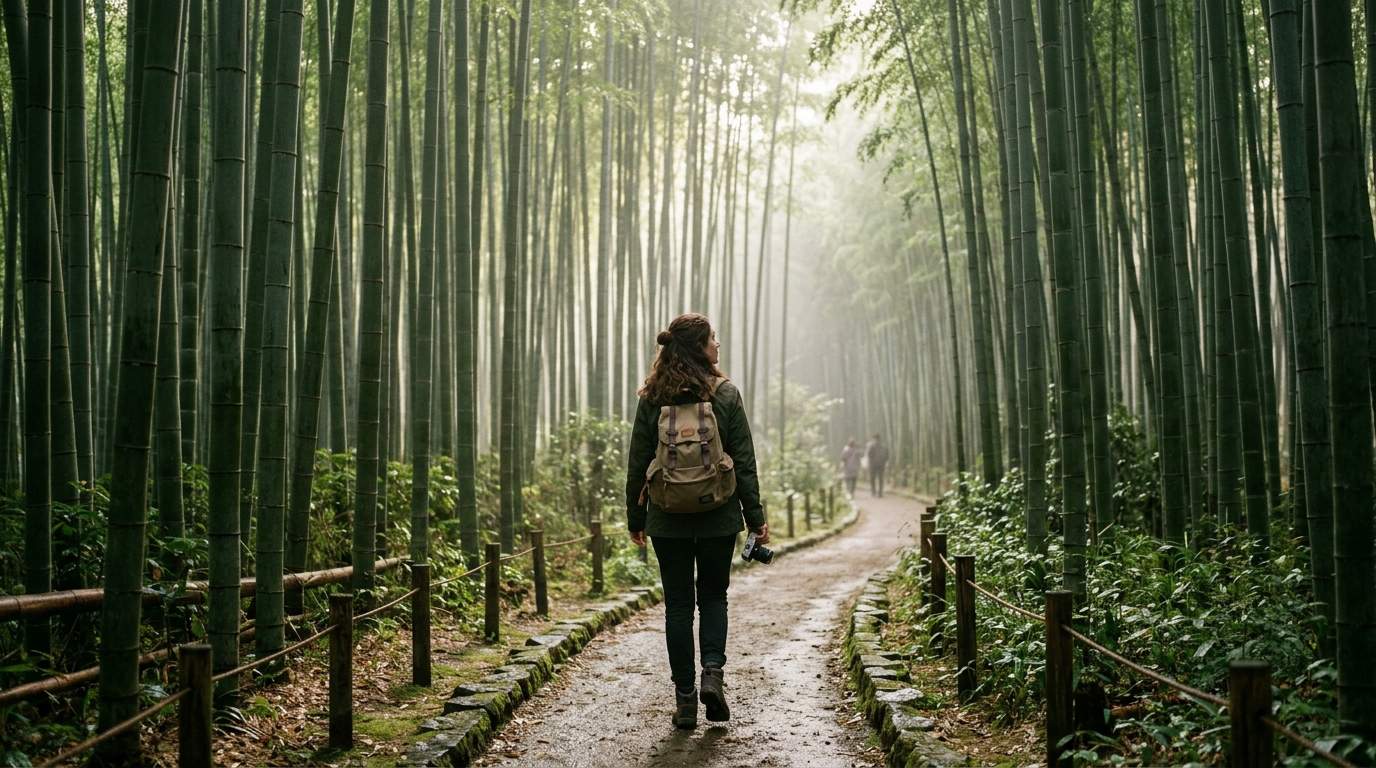
"You want to see Arashiyama?" my hostel roommate, Kenji, had chuckled, "Wake up with the roosters, or don't bother." He wasn't wrong. The Arashiyama Bamboo Grove is a Kyoto icon, but by mid-morning, it transforms into a human conveyor belt. Determined to experience its ethereal glow rather than its human gridlock, I set my alarm for 5 AM. The bus ride from my hostel, usually a packed affair, was blissfully empty, costing me a mere ¥230. Stepping off, the air was cool, almost chilly, and the only sound was the rustling of the towering bamboo stalks. The light filtering through the dense canopy cast long, dramatic shadows. For a glorious hour, I walked that path with only a handful of other dedicated early birds, the only cost being a few hours of sleep. It felt like walking into a painting, not a tourist attraction. Later, I grabbed a ridiculously cheap, but satisfying, tuna onigiri and hot green tea from a nearby convenience store for breakfast, smashing my daily food budget goals.
Nishiki Market's Evening Encore: Snatching Bargains and Flavors
Nishiki Market, Kyoto’s "Kitchen," is another place that can induce claustrophobia. But here’s a tip for the financially savvy and crowd-averse: go right before closing. Most guidebooks will tell you to hit it at lunch, but that's when prices are firm and queues are long. Around 5:30 PM, the atmosphere shifts. While some stalls begin to close, many start offering discounts on their fresh produce, pickles, and even some prepared foods to clear inventory. I snagged a bag of unbelievably fresh takoyaki for ¥300 (usually ¥500+) and a packet of seasonal persimmons for half price. A grandma at one pickle stall, her face a map of kind wrinkles, offered me a free sample of pickled daikon, then insisted I take a whole small jar for ¥100 when I praised it. The conversations were more relaxed, the vendors more willing to chat without the rush. It felt less like a market and more like a neighborhood gathering.
Gion's Unseen Alleys: Where Geisha Aren't a Photo-Op
Everyone flocks to Gion hoping to spot a geisha, often resorting to intrusive photography. My approach was different. Instead of the main Hanamikoji-dori, which is perpetually swarming, I ventured into the smaller, quieter side alleys and canals, particularly around Shirakawa Area. Here, the traditional machiya houses and willow trees create a timeless tableau, often devoid of large crowds. One evening, after wandering the cobblestone streets, I stumbled upon a tiny, unassuming tea house called 'Tsubaki,' recommended by a local I’d befriended at Nishiki Market. The experience was authentic: a simple matcha for ¥600, served by a quiet woman in a traditional kimono. We exchanged polite bows, and she offered a small wagashi sweet. It wasn't a show; it was a glimpse into a dignified tradition. I left feeling culturally enriched, not like I’d checked off a tourist box. Remember, these are someone's homes and workplaces; respectful observation, not aggressive photo-hunting, is the key.
The Hidden Hanami: Cherry Blossoms without the Chaos
My trip coincided with the tail end of cherry blossom season, a notoriously expensive and crowded period. While the Philosopher's Path was a beautiful, but shoulder-to-shoulder, experience, my real blossom joy came from a lesser-known spot: the canal banks near Okazaki Shrine, known for its rabbit statues. The crowds were thin, mostly local families picnicking beneath the delicate pink canopies. The atmosphere was joyful, relaxed, and entirely free. Later, a leisurely stroll through Maruyama Park's outer paths, away from the iconic weeping cherry tree (which is always surrounded by a mosh pit of photographers), revealed equally stunning blossoms and peaceful nooks. It proved that sometimes, the best views are found just by turning a corner and walking away from the main attraction.
Penny-Pinching & Pit-Avoiding: Kyoto's Unwritten Rules for Smart Travelers
Let's talk brass tacks. Kyoto can drain your bank account faster than you can say "arigato." But it doesn't have to. For transport, skip taxis; they're wallet vampires. A local bus pass for ¥700 for unlimited rides within a day is your best friend. Many key areas are also highly walkable if you have comfortable shoes. Food: convenience stores (Lawson, 7-Eleven, FamilyMart) are culinary lifesavers, offering fresh, delicious, and incredibly cheap meals, from bentos to hot soups. For more substantial dining, look for small, local eateries off the main thoroughfares. You’ll often find better quality and friendlier prices; a bowl of incredible ramen for ¥800 instead of the ¥1500 tourist-trap version. Accommodation: hostels or guesthouses offer private rooms for a fraction of hotel costs, often with a local vibe and valuable tips from staff. Booking ahead, especially during peak season, is non-negotiable for good deals. And always check local events; sometimes, free festivals offer the richest cultural immersion.
My Kyoto Takeaway: More Soul, Less Yen
Kyoto isn't just about ancient temples and serene gardens; it's about the rhythm of life that pulses through its less-trodden paths. By embracing "reverse travel" and focusing on local experiences, I found a city that was both deeply traditional and wonderfully accessible, all without falling into the predictable tourist traps.
Forget the crowds and exorbitant prices. Kyoto offers genuine, unforgettable experiences to those willing to stray from the path, save a little cash, and truly soak in its quiet magic.