Kyoto's Fushimi Inari Crush? Steal Serenity, Save Yen with THIS Reverse Route.
- Quick Tags: Kyoto off-the-beaten-path, Japan budget travel, Niche Kyoto experiences, Fushimi Inari alternative
- Editor: Chloe Jones
- Updated: Jul,21,2026
- Views: 231.6k









The late afternoon sun dipped below the ancient eaves of Nanzen-ji Temple, painting the moss-covered stones in shades of gold and amber. A stray cat, indifferent to the world, stretched languidly in a patch of warmth. My friend, Leo, let out a slow exhale. "This," he murmured, gesturing to the quiet garden where we were the only souls, "is exactly why we came." Just a few hours prior, we’d been navigating a human river at Kiyomizu-dera, elbowing for a glimpse of… well, anything. But here, the air was different—thicker with history, thinner with fellow tourists. It was a moment of profound peace, one you won't find on every Instagram feed, and it perfectly encapsulated our "anti-tourist" Kyoto quest.
Let's be real: Kinkaku-ji (the Golden Pavilion) is stunning. Absolutely picture-perfect. And you'll share that picture-perfect moment with approximately three thousand of your newest friends, all vying for the same sliver of lakeside space. We made a rookie mistake on our first Kyoto trip, chasing the "must-sees." This time, armed with a healthy skepticism for crowds and a thirst for genuine experience, we pivoted. Instead of the golden calf, we sought out the serene giants. Take Daitoku-ji Temple complex in northern Kyoto. For a grand total of zero yen, you can wander its expansive grounds, soaking in the atmosphere of multiple sub-temples. While some gardens within charge a small entry, the sheer scale and quiet dignity of the main grounds are free. We spent an entire morning there, getting gloriously lost among ancient pines and silent stone paths, a far cry from the ¥400 entry fee and endless photo queues elsewhere.
Everyone wants to "see a geisha" in Gion. And bless their hearts, they flock to Hanamikoji-dori like moths to a very crowded flame. What you often get are tourists rudely snapping photos or even chasing after weary maiko on their way to appointments. Our approach was different. We rose with the city, around 6 AM, and explored the back alleys and canals before the tour buses descended. We found ourselves on Shirakawa-dori, a picturesque canal lined with willow trees, almost entirely to ourselves. Later, nursing a green tea latte in a tiny, family-run café (cost: ¥500, not the ¥1500 price tag of the "famous" spots), a lone maiko, her intricate hair and kimono perfect, glided past the window, quickly disappearing into a discreet side street. It was a fleeting, natural moment, un-staged, and all the more special for it. No frantic camera clicks, just quiet appreciation.
Here's where your wallet truly sings. Kyoto's main tourist drag is riddled with eateries boasting "authentic Japanese cuisine" at prices that would make a salaryman weep. We quickly learned to dive into the depachika (department store basements). The food halls in places like Kyoto Isetan or Takashimaya are an absolute revelation. Fresh sushi sets, gourmet bento boxes, incredible pastries – all usually half the price of a sit-down restaurant, especially after 6 PM when they start discounting. One evening, Leo and I grabbed a sublime assortment of tempura, sashimi, and udon from the depachika for less than ¥1500 total, which we then enjoyed by the Kamo River. Compare that to the ¥3000+ per person we saw for similar quality in a tourist-centric restaurant near Nishiki Market. Another gem: the countless tiny ramen shops tucked away in residential neighborhoods. Look for the places with a ticket machine out front and only a few counter seats; those are usually local favorites, often serving up bowls for ¥700-¥900 that blow away the ¥1500 tourist versions.
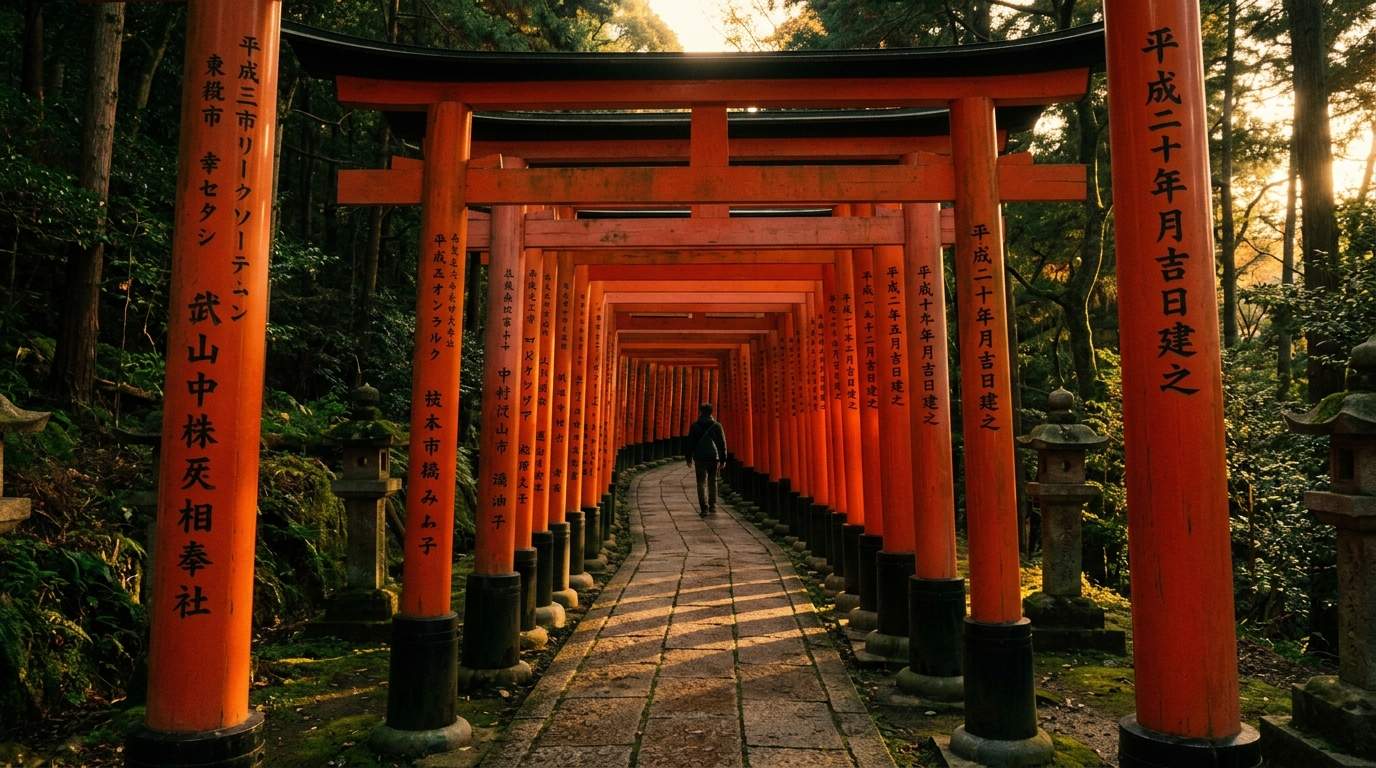
Ah, Fushimi Inari Taisha. Those endless vermilion torii gates are iconic for a reason. But navigating the lower trails during peak daytime hours feels less like a spiritual journey and more like a human traffic jam. Our secret? Go late. We started our ascent around 4 PM, just as the day-trippers were beginning their descent. The magic truly began after 5 PM. The crowds thinned dramatically. The setting sun cast long, dramatic shadows through the torii tunnels, transforming the experience from a photo op into something genuinely mystical. By the time we reached the summit viewpoint, the city lights below were twinkling, and we practically had the place to ourselves. The air grew cool and crisp as night fell, and the walk back down, illuminated by the shrine lamps, felt like traversing a different world entirely. No entrance fee, just strategic timing.
The Arashiyama Bamboo Grove is another victim of its own beauty. Go early, really early, or accept the selfie-stick gauntlet. But Arashiyama offers so much more. Skip the main path and rent a bicycle (around ¥1000 for the day) from one of the small shops near the train station. We cycled along the Hozugawa River, watching boatmen drift by, and found a tiny, unassuming garden called Okochi Sanso Villa (the former home of a silent film actor). Yes, it has an admission fee (¥1000), but it includes matcha tea and a sweet, and the gardens are meticulously maintained and rarely crowded. The views of the mountains were spectacular, and the tranquility was absolute. It felt like stepping into a private, perfectly curated corner of Japan, miles away from the selfie scrum just down the road.
Travel in Kyoto doesn't have to bankrupt you. For getting around, an ICOCA card (or Pasmo/Suica from other regions) is your best friend. Load it up and ride the excellent bus and subway network. That ¥2000 taxi ride from Kyoto Station to Gion? A ¥230 bus fare gets you there just as efficiently, often with a more scenic view. Accommodation is another big one. Instead of pricey hotels, explore guesthouses or family-run ryokans slightly off the main tourist arteries. We found a charming guesthouse with a shared bathroom but impeccably clean rooms for ¥4500 a night, versus the ¥10000+ for a comparable hotel. And finally, souvenirs: resist the urge to buy everything on the first street. Nishiki Market is wonderful for food, but tourist-trap prices abound for trinkets. Look for smaller, independent craft shops in less busy areas, or even check out the flea markets if your timing is right for truly unique finds.
Our Kyoto adventure wasn't about checking boxes; it was about digging deeper, finding the rhythm of the city beyond its postcard fame, and experiencing its timeless beauty without the crowds or the exorbitant price tags. It proved that sometimes, the best way to travel isn't to follow the map, but to forge your own path.