Paying Double for Pho? Hanoi's Real Deals & Local Secrets Exposed.
- Quick Tags: Hanoi budget travel, Vietnam niche spots, authentic Hanoi food, reverse tourism, cost-saving tips
- Editor: Chloe Jones
- Updated: Jul,23,2026
- Views: 388k









The late afternoon sun, a lazy artist, brushed golden highlights across the ancient, dusty buildings of Hanoi's Old Quarter. Scooters, like a thousand buzzing bees, wove a complex tapestry of sound and motion below. I sat perched on a ridiculously small plastic stool at a nameless corner stall, nursing a glass of trà đá (iced tea) that cost me a mere 5,000 VND. The tea was watery, perfectly sweet, and utterly refreshing. Across from me, an elderly woman expertly folded spring rolls, her movements a decades-old ballet. This quiet corner, just two blocks removed from the chaos of Beer Street, felt like a whispered secret. It made me wonder about all the other secrets this vibrant city held, especially those not plastered across Instagram feeds or shouted from tourist guides.
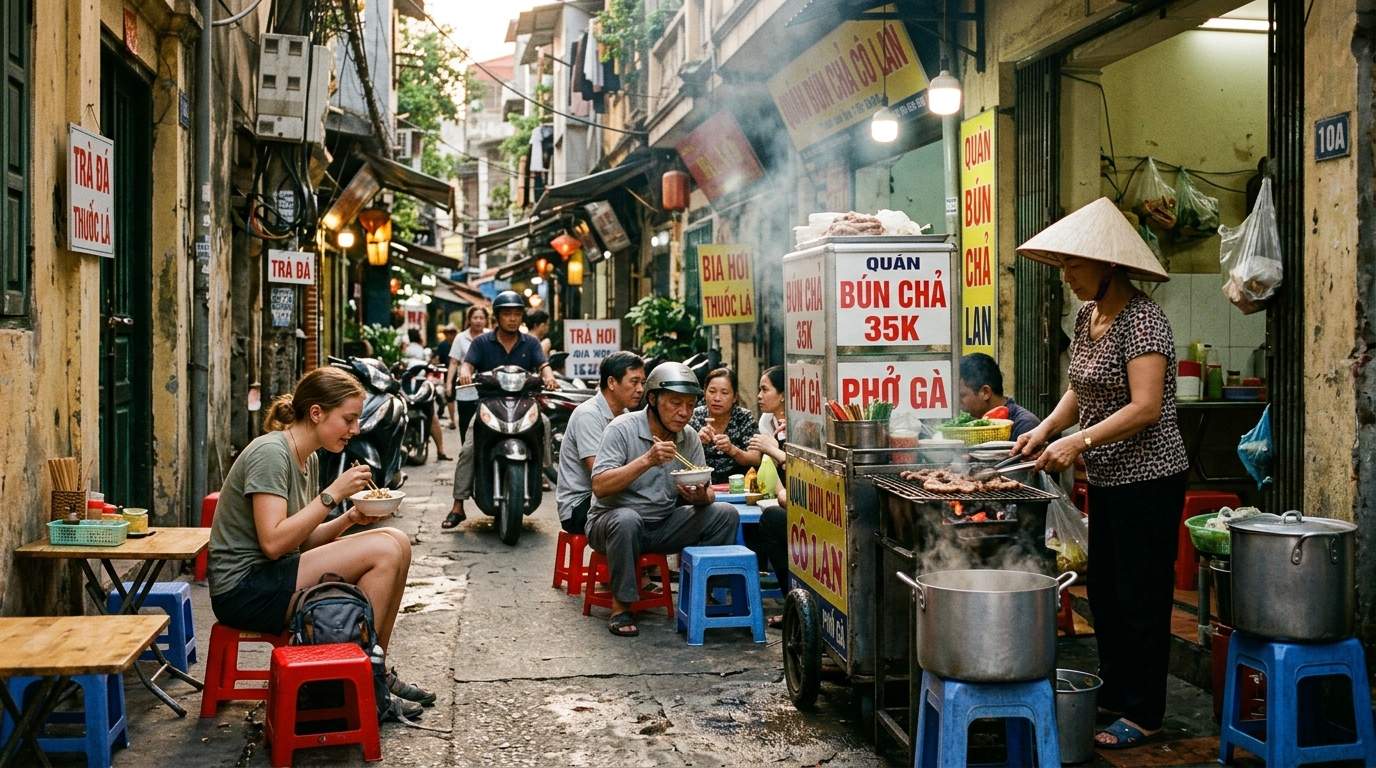
Ever land in a new city, follow the crowd to the 'must-try' spot, then wonder why your meal cost three times what you saw locals paying? Hanoi is a master of this subtle art. Picture this: a bustling pho joint near Hoan Kiem Lake, English menus waving, eager touts beckoning. You get a bowl of pho, perfectly respectable, but it sets you back 90,000 VND. A few days later, my buddy, Mark, and I stumbled into a tiny alleyway eatery – plastic stools, no English, just the rhythmic clang of cleavers and the fragrant steam of broth. We pointed, smiled, and received two bowls of the most exquisite pho gà (chicken pho) imaginable, each for 35,000 VND. That's a 55,000 VND difference per bowl! Multiply that by every meal, every coffee, every little souvenir, and you're funding someone else's vacation, not your own experience. It’s not about avoiding popular spots entirely, but about recognizing when you’re being served a side of 'tourist tax' with your noodles.
Forget the places with laminated menus and pictures. The real magic happens where choices are limited to a board scrawled in Vietnamese, or simply by observing what everyone else is eating. One afternoon, my sister, Chloe, and I were starving after a morning of walking. We dove into a narrow lane, drawn by the smell of grilled pork. There, at a place simply called 'Bún Chả Hàng Quạt,' we found our nirvana. Two steaming bowls of bún chả – grilled pork patties and slices in a sweet-sour dipping sauce with vermicelli noodles – cost us 40,000 VND each. Down the street, a tourist-focused place was charging 80,000 VND for a less flavorful rendition. The key? Look for places overflowing with locals, often on side streets, and be brave enough to point. A bonus: sometimes they’ll offer you a tiny glass of homemade rice wine. Just politely decline if you’re not feeling adventurous!
Egg coffee is famous in Hanoi, and yes, you should try it. But please, not at the super-packed places where you’re jostling for a seat. Instead, seek out places like Cafe Giảng (the original, but tucked away) or, better yet, a quiet spot on Nguyễn Hữu Huân street called Cộng Cà Phê. While Cộng is a chain, its older, more traditional outlets offer a lovely, atmospheric retreat without the overwhelming tourist rush of the Old Quarter’s lakefront cafes. Another discovery was a nameless spot down an alley off Hàng Gai. It had a tiny balcony overlooking a quiet residential street, serving cà phê sữa đá for 25,000 VND. No loud music, no selfie sticks, just the gentle hum of the city and the rich, dark brew. That’s where you taste Hanoi, not just its sugar-coated version.
Want to feel like you've stepped back in time and truly experienced Hanoi? Skip the bus tours and grab a Grab bike before sunrise. Ask to be dropped off at the foot of the Long Bien Bridge. This magnificent, French-built railway bridge, a survivor of wars, is a living museum. As the city slowly awakens, you'll see locals on bicycles, farmers heading to market, and motorbikes crossing its rickety metal tracks. Walk out onto its pedestrian path (watch for trains!) and absorb the panoramic views of the Red River. It’s free, culturally rich, and provides stunning photo opportunities without a single tourist bus in sight. My friend, Liam, and I spent an hour up there, watching the sunrise paint the sky, exchanging knowing glances about how much more 'real' this felt than our previous day's museum visit.
While the Temple of Literature is fairly well-known, most tourists rush through it like a checklist item. Don't. Pay the modest 30,000 VND entrance fee (about $1.20) and go in the late afternoon, an hour or so before closing. The crowds thin out, and the ancient courtyards, stone steles, and lush gardens take on a serene, almost contemplative atmosphere. It’s a perfect place to reflect on Vietnam’s scholarly past and escape the urban bustle. I once saw a group of students sketching the intricate architecture, completely absorbed, a stark contrast to the hordes of camera-wielding visitors earlier in the day. Look for the details, the carvings, the quiet corners – that’s where its true cultural value lies, not just in its main gates.
Hanoi’s true cost-effectiveness comes from knowing where to put your money. Accommodation? Ditch the Old Quarter’s cramped, overpriced hostels for a slightly larger, cheaper Airbnb or boutique hotel in the Ba Dinh district. We found a charming hotel there for $30/night, compared to $50+ for something similar (or worse) in the Old Quarter. A Grab taxi to the Old Quarter only cost us 40,000-60,000 VND ($1.60-$2.50) – a small price to pay for space and peace. Transportation? Absolutely use Grab (the Southeast Asian Uber/Lyft). For a motorbike taxi, expect 15,000-30,000 VND for most rides within the city. Traditional taxis are fine, but always confirm the meter is running or agree on a price before you get in. Cyclos (pedicabs) are romantic but negotiate hard; they often start at tourist-inflated rates like 200,000 VND for a short ride. Shopping? The Night Market is fun, but prices are often inflated. For better deals on local crafts and souvenirs, head to markets like Đồng Xuân (just explore the surrounding streets, not just the main building) or negotiate at smaller, family-run shops away from the main tourist drag. Always politely haggle, but do it with a smile – it’s part of the fun.
Hanoi has its charms year-round, but to truly enjoy walking its streets and exploring its corners without melting into a puddle or getting caught in a monsoon, aim for the shoulder seasons: October to November or March to April. The weather is generally milder, less humid, and you avoid the scorching heat of summer and the heavy rains. When I traveled with my friends in late October, the mornings were crisp, and the days warm enough for just a t-shirt, perfect for exploring on foot. Packing-wise, think light and breathable. Quick-dry fabrics are your best friend. Good walking shoes are non-negotiable – those uneven sidewalks will test them. And for those sudden, tropical downpours (even in shoulder seasons), a lightweight, packable rain jacket is far better than a flimsy umbrella you’ll lose. Oh, and a little bottle of insect repellent, especially if you plan on lingering by any bodies of water or in green spaces. Trust me, my legs still remember that one night.
Hanoi's true soul isn't found in its most advertised spots, but in the quiet alleys and honest conversations, offering rich experiences without breaking the bank. Peel back the layers of tourist gloss, and you’ll discover a city that truly rewards the curious and cost-conscious traveler.
**