Regret Your Kyoto Itinerary? Ditch Crowds, Uncover REAL Japan on a Shoestring.
- Quick Tags: Kyoto Off The Beaten Path, Budget Travel Kyoto, Japan Niche Destinations, Kyoto Local Food Guide
- Editor: Chloe Jones
- Updated: Jul,28,2026
- Views: 471.2k









The early morning mist still clung to the ancient moss-covered stones as I watched a lone heron stalk its breakfast in a tranquil pond, framed by an explosion of emerald maples. The only sound was the distant murmur of a stream and the soft rustle of bamboo. My friend, Alex, nudged me, "You really dragged me out of bed for this, didn't you?" I just grinned. This wasn't the postcard Kyoto plastered on every travel guide, nor was it the shoulder-to-shoulder shuffle of tour buses emptying their contents onto pristine temple grounds. This, my dear friends, was Kyoto, unfiltered, uncrowded, and delightfully cheap. And if you're picturing yourself desperately trying to snap a photo over a sea of selfie sticks, regretting every moment you spent planning, then congratulations – you're exactly who I'm talking to.
Let's be brutally honest: Kinkakuji, the Golden Pavilion, is stunning. From a distance. Up close, it's a glorified photo-op surrounded by a human tsunami, and the entry fee (500 yen per person, by the way) feels less like a donation and more like a tax on your patience. "Alex, imagine trying to find inner peace here," I'd quipped, as we observed the hordes from a strategic distance near a local tea stall, sipping lukewarm bottled ocha (150 yen vs. the temple's 300 yen fancy version). Instead, we sought out sanctuaries where the silence wasn't a commodity.
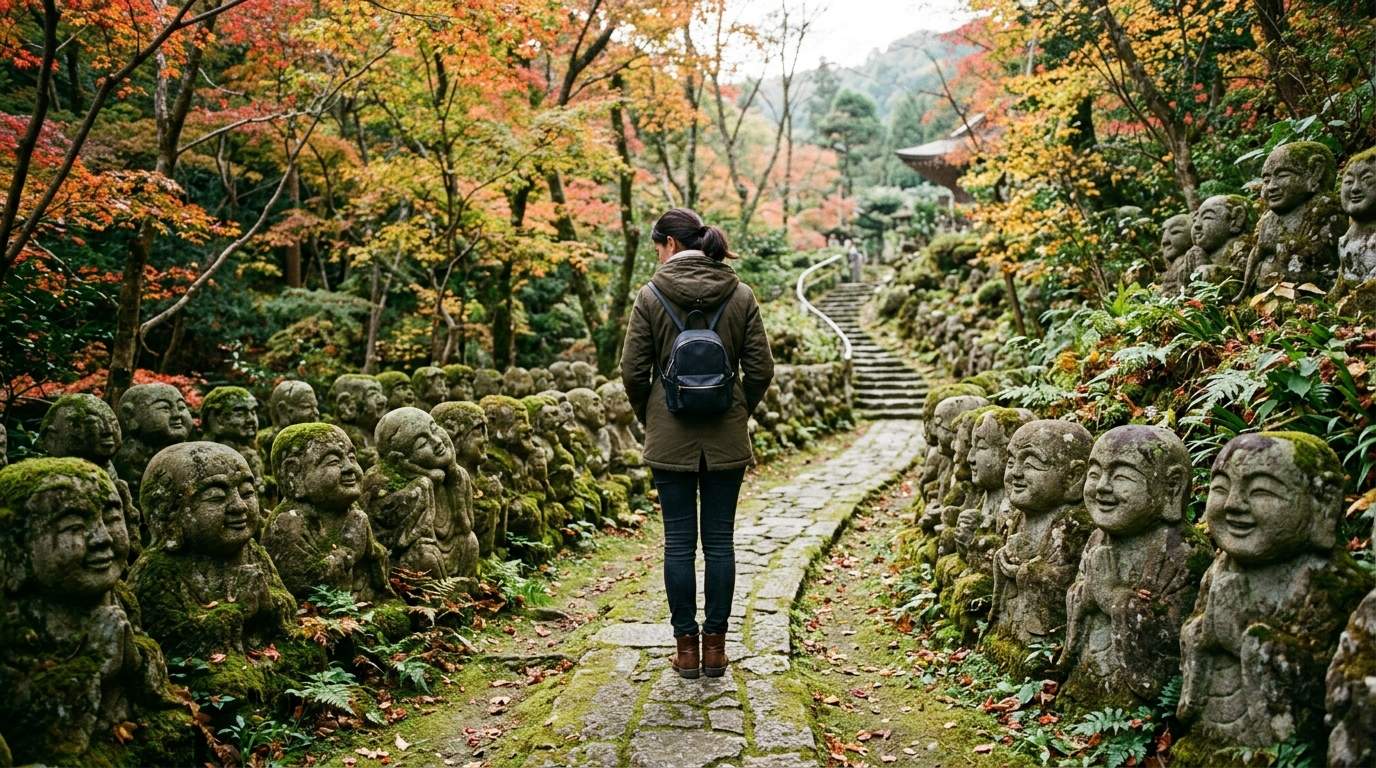
Our first stop, a bus ride northwest from the city center (a single fare is 230 yen, or grab a 600 yen day pass if you're hitting multiple spots), was Otagi Nenbutsu-ji. This temple, nestled on a hillside, houses over 1,200 rakan statues, each carved by amateur sculptors and each with its own unique, often mischievous, expression. We spent two hours wandering among them, finding one meditating with a Walkman, another holding a tennis racket, and countless others simply smiling. The entry fee was a modest 300 yen, and we shared the entire place with perhaps two other visitors. "This is like a quirky art gallery and a spiritual retreat rolled into one," Alex mused, clearly forgetting his morning grumbles. Compare that to the rush-hour experience at Kiyomizu-dera, where a similar 400 yen gets you a fleeting glimpse of grandeur through a dense fog of tourists.
Dining in Kyoto can quickly turn into a financial black hole if you stick to the tourist zones. Those picturesque spots near Gion or Arashiyama? Prepare for inflated prices and often mediocre food, where a simple bowl of ramen can easily set you back 1500 yen. My strategy? Venture just a few blocks off the main drag, or better yet, follow your nose to a tiny establishment with a handwritten menu and an elderly couple behind the counter.
One evening, after exploring the Nishijin textile district (a fascinating, free peek into Kyoto's traditional crafts), we stumbled upon a small izakaya. The proprietor, a stoic woman named Yumi-san, served us obanzai – traditional Kyoto home cooking. For about 800 yen each, we had a spread of four different small dishes: simmered vegetables, a delicate fish, pickles, and miso soup. It was honest, flavorful, and incredibly comforting. Alex, usually a fan of flashier fare, confessed, "This tastes like genuine warmth. Plus, my wallet isn't screaming." Contrast this with a tourist-trap kaiseki dinner easily running 8,000-10,000 yen for a single person, where you pay more for the presentation than the actual satisfaction. A quick chat with Yumi-san (with a few broken Japanese phrases and a lot of gesturing) revealed she sources her vegetables from a local market, explaining the freshness.
Everyone wants that iconic shot of the Arashiyama Bamboo Grove. Everyone. Which means by 9 AM, it's less a peaceful forest and more a human conveyor belt. Our trick? We embraced the "reverse commute." We caught the earliest possible train to Arashiyama (the scenic Sagano Line is convenient) arriving around 6:30 AM. The air was crisp, the bamboo stalks groaned softly in the breeze, and the light filtered through the canopy like liquid gold.
We walked the main path in glorious solitude, hearing only our footsteps. We even detoured to the lesser-known Okochi Sanso Villa (1000 yen, but includes matcha and a snack, making it a great value for the tranquil gardens and views) before the gates officially opened for general admission at 9 AM, getting a head start on the quiet. By the time the first tour buses rumbled in, we were already enjoying a surprisingly cheap matcha at a riverside stall (350 yen) watching the Hozugawa River flow, miles away from the chaos. This "reverse travel" philosophy applied to many spots; Fushimi Inari Taisha, while never truly empty, is magical and less crowded at dusk or even late at night, when the vermilion torii gates glow eerily under sparse lighting, offering a completely different, almost spiritual experience for free.
Kyoto hotels can be eye-wateringly expensive, especially during peak seasons (hello, cherry blossoms and autumn leaves!). Booking far in advance helps, but the real secret lies in looking slightly off-center. We skipped the high-rise hotels in the city center. Instead, we opted for a small guesthouse in the Gojo area, a short walk from a subway station and a bus stop.
Our room, a cozy traditional tatami affair with shared bathrooms, cost us about 6,000 yen per night. "I was expecting a shoebox, but this is actually charming!" Alex admitted, eyeing the sliding paper screens. The owner, a sweet elderly woman, plied us with free green tea and pointed us to a fantastic, unlisted bakery nearby for breakfast (250 yen for a fresh pastry and coffee). Compare that to the 15,000 yen+ rooms near Kyoto Station, offering little more than a bed and a view of another building. The savings alone meant we could afford a splurge on a proper, traditional bathhouse experience later!
Forget taxis, unless you're truly desperate – they'll bleed your budget dry. Kyoto's public transport system, primarily buses and subways, is efficient once you get the hang of it. A 600 yen day pass is your best friend for bus-heavy itineraries, while a 900 yen pass covers both buses and subways. We often walked, discovering tiny shrines and local shops hidden between major avenues.
For a final dose of serene escapism, we took a short train ride (about 20 minutes, 240 yen) to Kurama and Kibune. Kurama-dera temple, nestled deep in the mountains, offers stunning views and a challenging, rewarding hike (300 yen entry). Follow the trail to Kibune Shrine, known for its picturesque stone steps lined with lanterns. It felt like stepping into a different world entirely, with the cool mountain air and the rush of the Kibunegawa river. We even enjoyed a delicious (and still reasonably priced, around 1,500 yen) lunch at a riverside restaurant in Kibune, where our feet dangled in the cool water. It was a perfect blend of nature, culture, and pure tranquility, a stark contrast to the commercial buzz of central Kyoto, and a truly unforgettable "hidden secret" that cost us little more than train fare.
So, if your current Kyoto itinerary has you bracing for crowds and bracing your wallet, hit the brakes. There's a whole other Kyoto waiting, a city of quiet moments, genuine flavors, and experiences that won't just empty your pockets, but truly enrich your soul. It’s about seeking out the whispers, not just the shouts.