The Empty Bowl Stare: Is Your Smart Feeder Fueling Pet Anxiety?
- Quick Tags: pet food obsession, smart feeder problems, animal behavior solutions, reduce pet anxiety
- Editor: Editorial Team
- Updated: Aug,25,2026
- Views: 432.7k









Your heart sinks a little as you watch them. Fido paces the kitchen floor, ears twitching, eyes glued to the sleek, silent smart feeder. Luna sits, unblinking, fixed on the dispenser, even long after it’s delivered her morning meal. You invested in this technology for peace of mind, for a consistent routine, to reduce the incessant begging. Yet, here you are, feeling a knot of confusion and guilt, wondering if this convenience has somehow turned your beloved companion into a food-fixated creature, always anticipating the next drop, always seemingly... anxious.
It’s a common, utterly perplexing situation, and if you’re feeling this way, please know you are not alone. Many well-meaning pet parents find themselves in this exact predicament, questioning their choices and their ability to care for their furry family. Rest assured, you haven’t done anything wrong; you’ve simply stumbled upon one of the subtle, counterintuitive ways our pets experience the world around them.
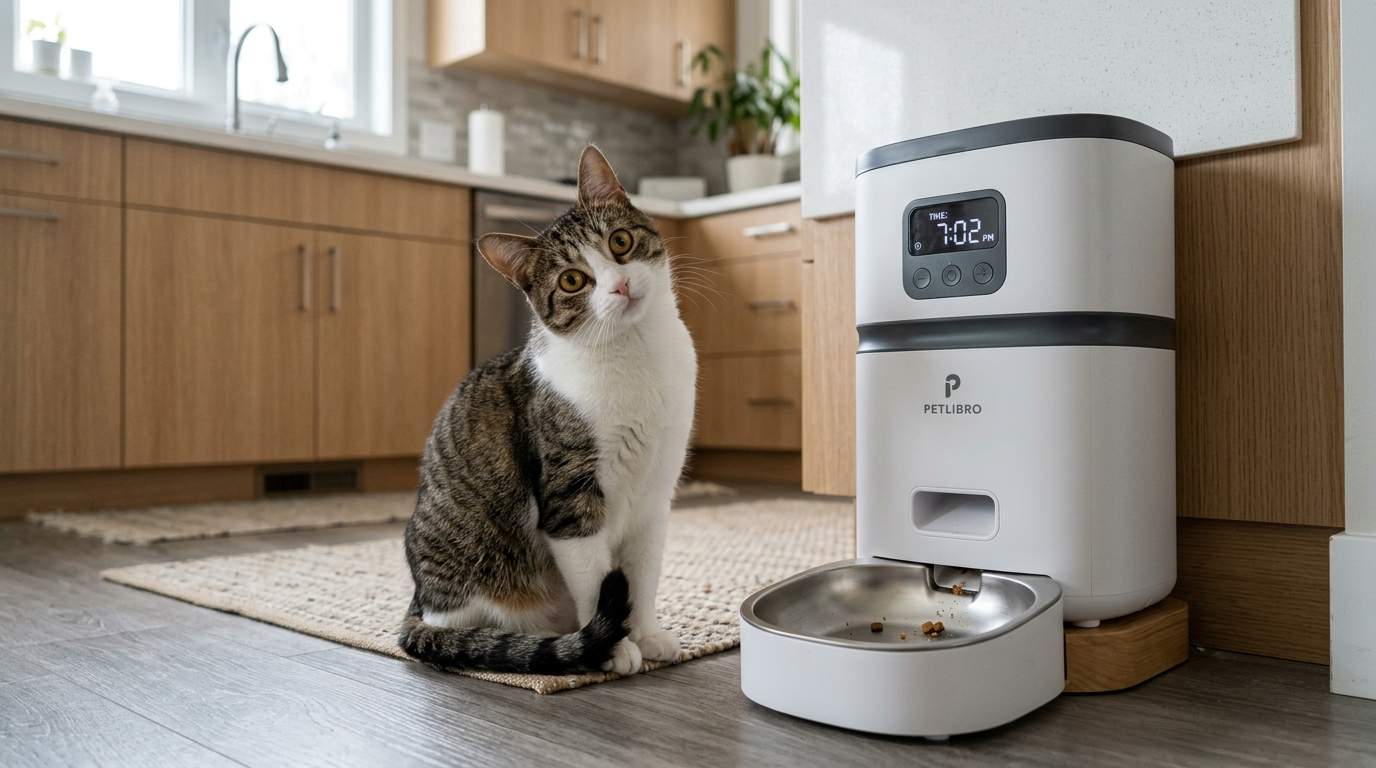
We often imagine that a precise feeding schedule, delivered automatically, creates predictability and reduces stress. For us, it’s a logical solution. But for many pets, especially our perceptive dogs and independent cats, the absence of human interaction during meal times can inadvertently create a new kind of uncertainty, rather than alleviate it. The feeder becomes a mysterious, impersonal source of sustenance, rather than an extension of your loving care.
Think of it from their perspective: "Where does the food come from? Will it always be there? When exactly will it appear?" Without you as the consistent provider, the focus shifts entirely to the machine. Your pet might begin to "guard" the feeder, not out of aggression, but out of a deep-seated need to predict and control this new, vital aspect of their lives.
For countless generations, the act of feeding has been a profound ritual, a cornerstone of the human-animal bond. For dogs, it reinforces their place within the "pack," with you as the trusted provider. For cats, the moment of being fed can mirror the end of a successful hunt, a primal satisfaction. When a machine silently dispenses food, these deeply ingrained behavioral and emotional connections are often diminished.
The subtle cues – your footsteps, the rustle of the food bag, your voice announcing "dinner time!" – are all part of a larger, reassuring narrative. Taking these away can leave a void, turning a bonding experience into a solitary, perhaps even slightly stressful, mechanical transaction.
When your pet stares intently at the smart feeder, it’s easy to interpret this as a sign of food obsession. However, this often stems from a more complex emotional state: adaptation, anticipation, and sometimes, plain old boredom. They're trying to figure out the new rules of the game.
Perhaps your dog, a lively Labrador for example, is feeling under-stimulated between meals. Without a human to engage with for food-related activities, the feeder becomes the only "game" in town. For a cautious cat, like a Siamese, the precise, unvarying timing might feel less like routine and more like an unyielding demand, causing them to hover and watch for any deviation.
While routine is good, hyper-focus on a single, unvarying moment can sometimes amplify anxiety rather than soothe it. Imagine if your entire day revolved around waiting for a single, precisely timed event. The moments leading up to it might become fraught with hyper-vigilance, and the moments immediately after might feel strangely empty or unfulfilling. This is particularly true for intelligent breeds like Border Collies, who thrive on mental engagement beyond mere predictability.
The good news is, you can absolutely recalibrate your pet’s relationship with their meals and the smart feeder. It’s about conscious integration, not abandonment.
Even if the feeder dispenses the meal, be present. Walk into the kitchen, say a cheerful "Time to eat!", and perhaps even hand-deliver a small portion of their food before the main dispense. This re-establishes your role as the benevolent provider. For puppies and young dogs, this human presence is crucial for social learning and trust.
Don’t let the smart feeder be the only source of food. On occasion, use a puzzle feeder, a slow-feeder bowl, or even scatter some kibble in a snuffle mat. This turns mealtime into an enriching activity, a "mini-hunt" that engages their brains and natural instincts, especially beneficial for cats and more independent canine breeds.
Is your pet truly obsessed with food, or are they under-exercised or under-stimulated? Often, what looks like food obsession is a cry for more mental and physical engagement. A long walk before mealtime, a new interactive toy, or a short training session can significantly reduce their fixation on the feeder. This is particularly vital for energetic dogs like German Shepherds.
Every pet is unique. A senior cat with dental issues might need softer food delivered gently, while a young, boisterous Beagle might thrive on working for their meal through a complex dispenser. For small, niche pets like chinchillas or hamsters, providing enrichment and safe foraging opportunities around their feeding station is equally important. Observe your specific companion; their behaviors are telling you something.
Remember, technology is a tool, and like any tool, its effectiveness lies in how we wield it. Discovering that your smart feeder isn't quite working as intended isn't a failure on your part, but an opportunity to deepen your understanding of your pet's complex inner world. By weaving back in human interaction, mental enrichment, and thoughtful observation, you can transform mealtime from a source of anxiety into a joyful, bonding experience once more. You are a thoughtful, caring pet parent, and with a few gentle adjustments, you will absolutely help your beloved companion thrive.