Your Dog Hides at the Dog Park – That’s Not Shyness, It’s Healthy Boundaries
- Quick Tags: dog park anxiety, shy dog behavior, socialization for dogs
- Editor: Chloe Jones
- Updated: Aug,13,2026
- Views: 282.6k









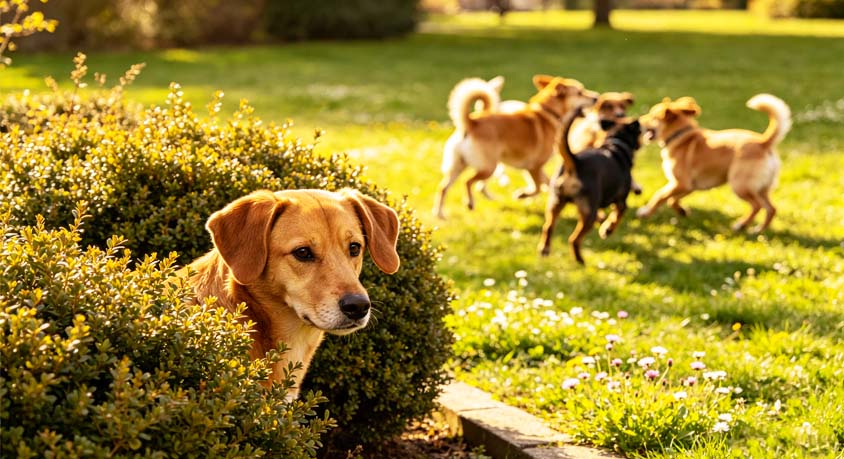
You drive to the dog park with high hopes. Your dog wags his tail in the car. But the moment you open the gate, he freezes. His tail tucks. He presses against your legs as a pack of bouncing dogs rushes over.
“Come on, go play!” you coax, gently pushing him forward. He slinks to the edge of the fence and stands there, motionless, while everyone else runs wild.
You feel embarrassed. Why can’t he just be normal? Is he broken?
Here’s the truth that changed how I see dog parks forever: Your dog isn’t shy or broken. He has healthy social boundaries. And forcing him to “play” with strange dogs is like sending an introvert to a crowded nightclub.
I once worked with a sweet spaniel named Coco. Her owner took her to the dog park three times a week, convinced Coco needed “more exposure.” Instead of becoming more confident, Coco started snapping at dogs who got too close.
The owner thought Coco was becoming aggressive.
But when I watched Coco at the park, I saw a dog politely saying “no thank you” – turning her head, walking away, stiffening her body. The other dogs didn’t listen. So Coco escalated to a snap.
We stopped dog parks completely. Instead, we arranged one-on-one playdates with calm, older dogs. Within a month, Coco was happily trotting beside her new friend. She wasn’t unsocialized. She was overwhelmed.
Challenge the conventional wisdom: Dog parks are not mandatory. Many well-adjusted dogs dislike them. And forcing a shy or anxious dog into a chaotic group setting can actually create fear-based aggression. Real socialization is about quality, not quantity.
Your dog’s avoidance isn’t a failure. It’s information.
You’ve heard this advice at the park: “Don’t interfere. Dogs need to work it out themselves.”
This is how fights start.
Responsible owners watch their dogs constantly and intervene at the first sign of stress. A dog who hides behind you is asking for help. A dog who pins another dog isn’t “teaching manners” – he’s bullying.
Your dog turns his head away but keeps his eyes on the other dog, showing the whites. That’s not cute. That’s a warning.
Your dog stops moving entirely. Muscles tense. Tail stops wagging. He’s one second away from a snap or a bolt.
A dog who suddenly scratches or shakes off (like after a swim) mid-interaction is trying to release stress. It’s not random – it’s a calming signal.
If you see any of these, call your dog away. No shame. No punishment. Just a quiet exit.
You can give your dog a rich social life without the chaos of a crowded park.
Take your dog to a quiet field, schoolyard after hours, or industrial park on weekends. Attach a long line (never retractable). Let him sniff, wander, and simply be a dog without strange dogs in his face.
Many dogs don’t need dog friends at all. They need space, sniffing opportunities, and time with you.
Find one or two dogs with similar energy and play style. Introduce them on neutral ground (not your home). Keep the first meeting to 10 minutes. End on a good note.
One client’s reactive terrier made his first friend – a calm, older lab – after three slow intros. They now meet weekly for quiet walks together, not wrestling matches.
Use a treat pouch to reward calm behavior around other dogs at a distance. Walk near the dog park (outside the fence) and feed treats every time your dog looks at the dogs then back at you. This builds neutrality, not fear.
Some bandanas are infused with synthetic dog-appeasing pheromones (DAP) or lavender. While not a cure, they can lower baseline anxiety in sensitive dogs. Put it on 20 minutes before any potentially stressful outing.
One family used a calming bandana for their anxious rescue during vet visits. “He still doesn’t love it,” they said, “but he stops trembling.”
You are never wrong for leaving early. You are your dog’s only advocate.
Small dog areas can be just as stressful – sometimes more. Little dogs often get over-aroused and snappy. Watch before entering. If the energy feels tense, skip it.
You brought your dog to the park because you love him. You wanted him to have friends, to run free, to be happy. And when he hid behind your legs, you wondered what you did wrong.
Nothing. You did nothing wrong.
Some dogs are homebodies. Some prefer one friend over a crowd. Some just want to sniff the same bush for twenty minutes and then nap. That’s not a problem to fix. That’s a personality to honor.
Tomorrow, skip the dog park. Take him to a quiet field on a long leash. Let him sniff. Watch his shoulders soften. See him breathe.
That loose, happy walk is not less than. It’s just different.
You’ve got this. And he already thinks you’re the best friend he’ll ever need.