The puppy teeth that pierce your skin: aggression or a missing language?
- Quick Tags: puppy biting behavior, teething puppy, bite inhibition training, mouthing solutions
- Editor: Chloe Jones
- Updated: Jul,30,2026
- Views: 475.2k









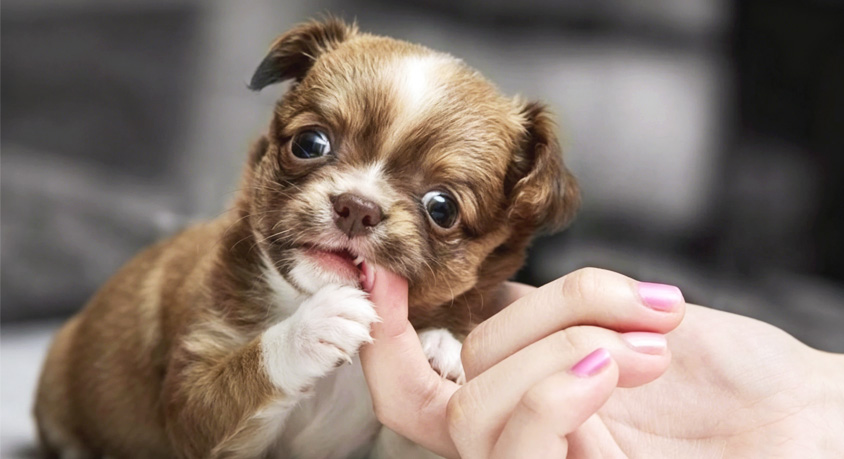
You sit on the floor to play with your new puppy, Finn. Within seconds, his needle-sharp teeth latch onto your thumb. You yelp. He clamps harder. You try to pull away, but he follows your hand like a magnet, growling softly, tail wagging the whole time.
“Is he… aggressive?” you whisper to yourself. “Did I bring home a dangerous dog?”
By the end of the day, your hands look like you’ve arm-wrestled a rose bush. You feel frustrated, embarrassed, and secretly worried that you’ve already failed as a owner.
But here is the truth that changes everything: that little shark-toothed monster is not trying to hurt you. He is trying to learn one of the most important social lessons of his life – and if you teach it wrong, you might accidentally create the very problem you fear.
Puppies learn bite inhibition from their mothers and littermates. When a puppy bites too hard during play, a sibling yelps and walks away. The biter learns: “Hard bite = fun ends.” This lesson happens hundreds of times between weeks five and eight.
When you bring an eight-week-old puppy home, he has barely started that education. He does not know that human skin is thinner than puppy fur. He does not understand that your yelp means “stop” – because in his litter, a yelp was often followed by more wrestling.
That clamping, growling, tail-wagging attack is not dominance. It is a confused toddler asking: “Is this how we play? Tell me the rules.”
These popular training ideas sound logical but often backfire. Let me gently take them off your hands.
A high-pitched yelp can over-excite many puppies – especially herding and terrier breeds. They hear a squeaky toy sound and bite harder. Pushing away triggers their chase instinct. Suddenly your hand becomes a moving target. The biting gets worse, not better.
Physical corrections teach a puppy that human hands are unpredictable and scary. A puppy who learns to fear hands may stop mouthing – but he may also growl, snap, or bite out of fear later. You get quiet compliance on the outside and a ticking time bomb on the inside.
You do not need to yell, push, or dominate. You need to become boring. Immediately.
The moment Finn’s teeth touch your skin with any pressure, say nothing. Do not yelp. Do not say “ouch.” Simply stand up, turn your back, and walk away. Step behind a baby gate or close a door for ten seconds. Then return, pick up the toy, and resume play.
Why this works: puppies hate losing social connection more than they love biting. Within three to five repetitions, most puppies learn: “Teeth on human = human disappears.” That is a consequence they understand.
Once Finn stops hard biting, you can teach bite pressure. Let him mouth your hand. The moment it feels slightly uncomfortable, say a quiet “too hard,” stand up, and leave for five seconds. He learns to use his mouth like a pair of tweezers, not a vice.
One of my clients practiced this for two weeks with her Labrador puppy, Leo. By week three, Leo would take a treat from her palm without any tooth contact. She cried happy tears.
Most nipping stops by five to six months of age, when adult teeth come in. But some biting patterns need professional help.
A puppy who bites and simultaneously freezes, stares directly at you, and growls with a closed mouth (not open-mouthed play growling) is showing real aggression. This is rare under four months but possible. Call a force-free behavior consultant.
A puppy over six months old who bites hard enough to break skin – especially if he does not inhibit pressure at all – may have missed the critical socialization window. Structured bite inhibition training with a professional is needed.
If Finn only bites one person in the house – often a child or an elderly adult – check for medical issues. Pain (ear infection, teething pain on one side) can cause targeted mouthing. A vet check first, then behavior work.
Between twelve and twenty weeks, puppies lose their baby teeth and grow adult ones. Their gums ache. Biting relieves the pressure. You can help without becoming a chew toy.
Soak a rope toy in low-sodium chicken broth and freeze it. Offer a frozen carrot (supervised to prevent choking) or a rubber teething ring stuffed with wet kibble and frozen. Cold numbs the gums and satisfies the urge to chew.
Do not leave ten toys on the floor. Rotate three toys every two days. Novelty keeps interest high. A puppy who is engaged with a frozen chew is a puppy who is not chasing your ankles.
Three months from now, Finn will have lost every one of those needle-sharp baby teeth. His adult mouth will be softer, his jaw control stronger. If you teach bite inhibition gently and consistently, he will become a dog who can take a treat from a toddler’s hand without a single scratch.
One of my own past puppies, a wild Border Collie named Scout, turned my forearms into a map of red dots for six weeks. I cried twice. I questioned every life choice. But I used reverse time-outs, frozen chews, and patience. Today, Scout is a therapy dog who lets kindergarteners hug him.
The puppy teeth that pierce your skin today are not a sign of failure. They are a sign of need – a small, confused, toothy creature asking you to teach him how to be gentle. And you, tired as you are, are exactly the right person for that job.
Next time Finn latches onto your thumb, take a breath. Do not fear the puppy. Fear missing the lesson. Stand up, walk away, count to ten. Then come back with a toy and try again. That is not giving up. That is teaching. And teaching is how wild teeth become soft mouths.