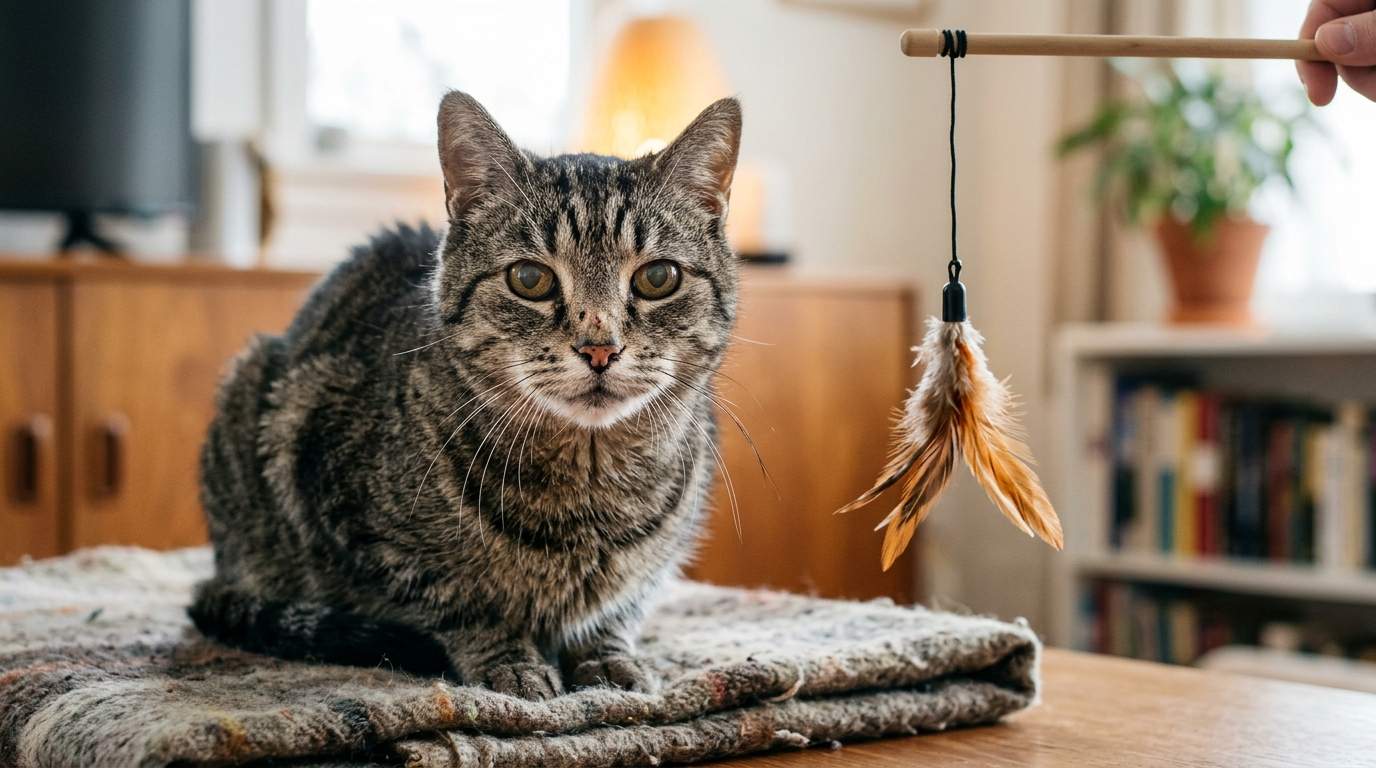
The cat who kneads your belly before sleep: love or a repetitive coping script?
- Quick Tags: cat kneading behavior, why cats knead blankets, kitten nursing instinct, feline stress signs
- Editor: Editorial Team
- Updated: Jul,31,2026
- Views: 283.3k









The lights are off. You are finally drifting off. Then a soft pressure appears on your stomach – two paws, rising and falling in a rhythmic, almost hypnotic push-pull. Your cat, Juno, kneads your pajama shirt with her eyes half-closed, purring deeply.
“She’s showing me she loves me,” you smile, and fall asleep feeling chosen.
But last week, Juno started kneading the same spot on the couch for forty-five minutes straight. Her claws were fully extended. She ignored her favorite toy. She ignored you. And you wondered: is this still love, or is something else driving those paws?
All kittens knead their mother’s belly to stimulate milk flow. It is a hardwired survival reflex. The motion, the soft texture, the warmth – they trigger a flood of oxytocin, the bonding hormone. A cat who kneads as an adult is often revisiting that infant memory.
But here is the question that challenges the cozy story: does an adult cat knead because she is happy, or because she is trying to make herself feel happy in a stressful moment? Research on repetitive behaviors suggests that kneading can cross from relaxed reminiscence to compulsive coping.
One of my clients had a rescue cat, Miso, who kneaded for hours every evening. Her owner thought it was adorable. Then Miso started losing fur on her front paws. The vet diagnosed obsessive-compulsive disorder triggered by chronic anxiety. The kneading was not a hug. It was a tranquilizer she administered herself.
Not every kneading cat needs help. But these two patterns deserve a closer look.
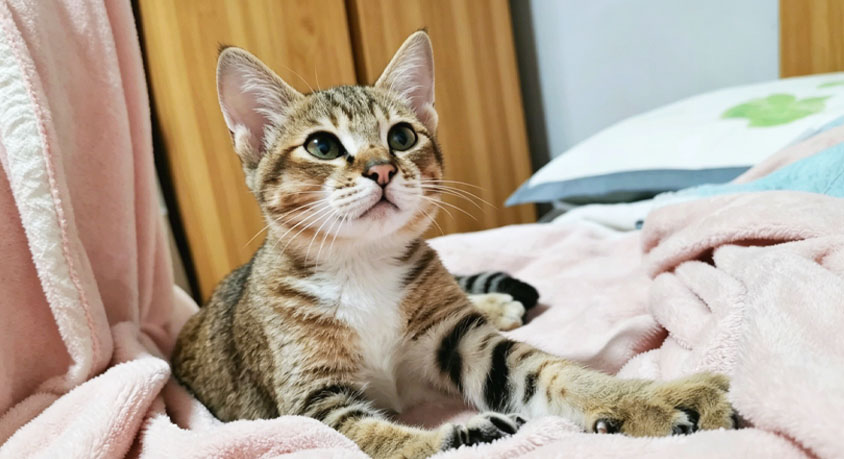
A content cat kneads for a few minutes, then curls up and sleeps. A cat who kneads for half an hour or more – especially on hard surfaces, with claws out the whole time – may be using the motion to dull emotional pain. Ask yourself: has anything changed? A new pet? A move? A missing family member?
If Juno kneads your pillow only after you leave for work, or kneads the carpet while hiding behind the sofa, that is not affection. That is a cat who is struggling to regulate her own nervous system. Set up a camera. You might see pacing, over-grooming, or other hidden stress signs.
Before you worry, rule out the simple explanations first.
Indoor cats with no hunting outlet often develop repetitive motor behaviors – kneading, tail chasing, or licking surfaces. The solution is not to stop the kneading, but to add enrichment. A puzzle feeder before the evening kneading session, or a bird-watching perch by the window, often reduces the duration significantly.
Many cats are over-aroused by soft, synthetic blankets that feel like their mother’s belly. They knead, then drool, then knead more – stuck in a loop of infantile longing. Try swapping the fleece for a cotton quilt or a flat-woven blanket. Some cats stop the excessive kneading overnight.
Arthritic cats sometimes knead to stretch stiff joints. Cats with stomach discomfort (constipation, hairballs, or inflammatory bowel disease) may knead hard surfaces to apply pressure to their abdomen. If your cat kneads and also vomits frequently, loses weight, or has litter box issues, a vet check is the first step, not a blanket swap.
You do not need to stop all kneading. You just need to know if it is voluntary joy or automatic distress.
Next time Juno kneads for more than a few minutes, gently call her name. If she looks up, blinks slowly, and stops or changes position – she is likely content and in control. If she ignores you completely, keeps kneading with a fixed stare, and shows no reaction to a treat waved near her nose – that is a repetitive loop. Break it gently by picking her up and moving her to a different room. Offer a food puzzle instead.
Note how long she kneads each time. A happy knead: under five minutes. A worried knead: over fifteen minutes, often at the same time of day, in the same spot, with no variation.
I worked with a senior cat named Olive who kneaded her owner’s chest for an hour every night. The owner could not sleep. She felt guilty even thinking about stopping it. We added a heated self-warming bed next to her pillow, sprayed it with a calming pheromone, and placed Olive’s paws on it every time she started kneading the owner. Within ten days, Olive shifted her kneading to the bed. She still kneaded, but for ten minutes, not sixty.
“She still loves me,” the owner said. “She just needed her own space to do it.”
Tonight, when Juno’s paws press into your belly, do not automatically feel warm. Watch the clock. Notice the claws. And if those paws keep moving long after the memory of milk has faded, let it be a quiet question, not a bedtime story.
Your cat is not broken. She may just be telling you that her world needs more softness – or more structure. Either way, you are the one with opposable thumbs. You can give her both.