When a chinchilla chews its own fur: a bad habit or a silent scream?
- Quick Tags: chinchilla fur chewing, barbering behavior, small pet stress, chinchilla dental pain
- Editor: Chloe Jones
- Updated: Aug,04,2026
- Views: 285.1k









You spot a small patch of uneven fur on your chinchilla’s hip. At first, you think it’s shedding. Then you see it happen: Pepper twists her head around, grabs a mouthful of her own lush gray coat, and snips it off. She chews. She swallows.
“She must be bored,” you tell yourself. You buy a new chew stick.
But the bald patches grow. Pepper’s coat now looks like a moth-eaten sweater. You have tried more toys, a bigger cage, even a companion. Nothing stops her teeth from turning against her own body.
What if chinchilla fur chewing is not a “bad habit” – but a physical pain signal that everyone misreads as a behavior problem?
Veterinarians call this barbering behavior. It is common. But here is the challenge: barbering is not one condition. It is two. Mixing them up means treating the wrong problem for years.
A chinchilla without enough vertical space, hiding boxes, or a proper dust bath routine can develop barbering from pure boredom. This version starts slowly, involves multiple body areas, and improves with enrichment upgrades.
A chinchilla with molar spurs cutting into her cheeks often chews fur over her flank or lower back. The theory: fur chewing releases endorphins that temporarily dull oral pain. She is not stressed. She is self-medicating.
One client spent eighteen months rearranging her chinchilla’s cage. The barbering only got worse. A veterinary dental exam revealed molar spurs so sharp they had lacerated both cheeks. After treatment, the fur chewing stopped within two weeks.
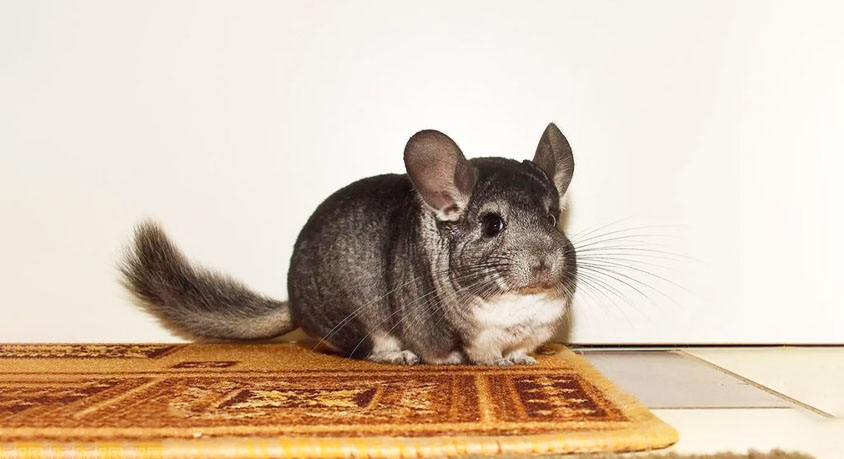
Chinchillas have open-rooted teeth that grow continuously. Without enough hay (80% of diet), molars develop sharp points that dig into soft tissue. They cannot cry or point to their mouth. They chew fur instead.
Place fresh timothy hay in the cage at night. In the morning, check how much is eaten versus scattered. A chinchilla with dental pain drops hay, chews oddly, or eats less – even if she seems eager for treats. If fur chewing appears with reduced hay intake, skip the behaviorist and call a vet.
You do not need equipment. You need a careful eye.
Pain-related barbering often focuses on one area – usually the flank or lower back that a chinchilla can reach without stretching a sore mouth. Stress-related barbering tends to be more scattered across both sides of the body.
Upgrade the cage for two weeks: add a second level, a solid-surface wheel, three hiding boxes, and a dust bath every other day. Also add a granite cooling slab – chinchillas overheat easily, and heat stress can trigger fur chewing. If the barbering stops or greatly reduces, stress was the cause. If it continues unchanged, dental pain is far more likely.
Not every bald patch is an emergency. These two patterns are.
Wet fur around the mouth or chin is never normal. It means the chinchilla cannot swallow properly – often from advanced dental spurs or a tongue injury. This combination needs care within 24 hours.
Weigh your chinchilla weekly with a kitchen scale. A steady drop over two weeks, even if she seems to eat, points to internal pain. Barbering and weight loss together are not a behavior problem. They are a medical alert.
You cannot guarantee zero fur chewing. But these habits lower the risk dramatically.
Timothy hay wears down molars naturally. Pellets and treats do not. A chinchilla who fills up on treats will ignore hay – and develop dental spurs within months. Offer hay in three different spots in the cage to encourage foraging.
Dust baths remove oil and moisture from the coat. A chinchilla with itchy, greasy skin may start barbering to relieve the irritation. Provide a dust bath for 10–15 minutes every other day – no more (skin dries out) and no less (oil builds up).
Wild chinchillas live in rocky crevices and jump between ledges. A cage that is wide but not tall does not meet their needs. Aim for at least 36 inches in height, with wooden ledges at different levels. A chinchilla who can jump and hide feels safe. A safe chinchilla is less likely to turn to fur chewing.
I worked with a rescue chinchilla named Dusty who had barbered himself nearly bald on both hips. His previous owner had tried every toy on the market. A vet found molar spurs so long they had curled inward. After dental filing and two weeks of soft food, Dusty’s fur grew back. He never chewed himself again.
“I thought he was anxious,” the new owner said. “He was just hungry for relief.”
Tonight, when you look at your chinchilla’s coat, do not just count the bald spots. Watch her eat hay. Feel her jawline for wetness. Weigh her once a week. And if those teeth keep snipping fur no matter what you add to the cage, let it be the reason you examine her mouth – not the reason you blame yourself.
That chewed fur is not a failure. It is a sentence. And sometimes the sentence reads: “My teeth hurt, and this is the only way I know how to say it.”