When a hedgehog curls into a tight ball: defense or a hidden fever?
- Quick Tags: hedgehog huffing behavior, pet hedgehog health, self-anointing quilling, hedgehog stress signs
- Editor: Chloe Jones
- Updated: Aug,03,2026
- Views: 207.8k




You reach into the cage to say goodnight. Your hedgehog, Pip, instantly tightens into a perfect spiky ball. He makes a soft huff-huff sound. You pull your hand back. “He’s just grumpy,” you whisper. “That’s what hedgehogs do.”
But this morning, Pip did not touch his mealworms. His water bowl is full. And when you gently lifted his hide, he did not unroll – not even a crack.
Suddenly, that tight ball does not look like attitude. It looks like a wall between you and an animal who might be silently suffering.
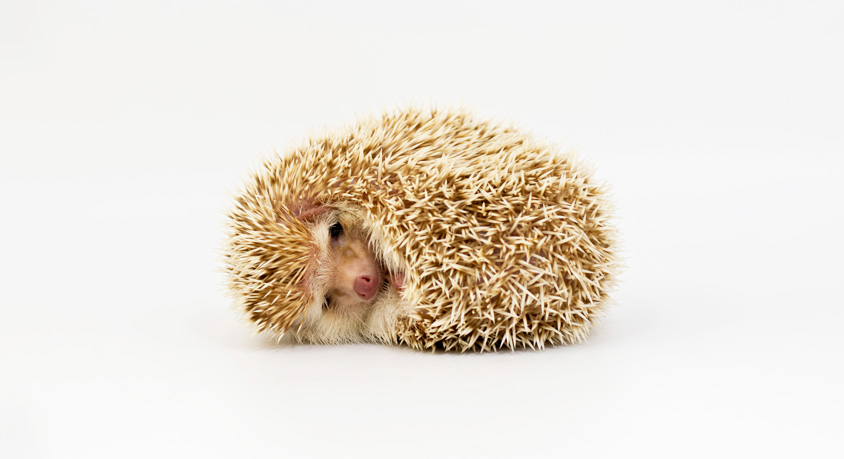
A hedgehog curls to protect its soft face, belly, and feet. In nature, this is a defense against predators. In your living room, it is often a response to fear – but also to pain, cold, or illness.
A healthy hedgehog will unroll within a minute or two when placed in a quiet, warm environment. A hedgehog who stays curled for five minutes or longer – especially with eyes partially open and quills flattened tight – may be too weak or sick to risk unrolling. One of my clients mistook her hedgehog’s constant curling for bad temperament. The vet found a severe respiratory infection.
These popular beliefs delay care and create frustration.
Huffing is a warning. But a hedgehog who huffs every single time you approach – even after months of gentle handling – may be in chronic pain from dental disease or arthritis. Pain makes everything feel like a threat.
A hedgehog can force himself to unroll through sheer will. Watch how he moves afterward. Does he wobble? Does he walk with a hunched back? Reluctant unrolling with stiff gait is not a personality flaw. It is a symptom.
Not every curl is an emergency. These three patterns are.
Hold Pip in a fleece pouch on your lap. Speak softly. If he stays tightly curled for over three minutes despite warmth and stillness, call your vet. A sick hedgehog conserves energy by staying balled up.
If the quills around his face look damp or you see drool on your hands, that is not normal. Mouth infections, tooth spurs, or choking on bedding material can cause excessive drooling. The curl becomes a way to hide mouth pain.
A healthy hedgehog sleeps flat on his side or stretched out in a hide. A hedgehog who sleeps curled into a tight ball is trying to preserve body heat – often because the cage is too cold (below 22°C / 72°F). Cold hedgehogs stop eating and become lethargic quickly.
Hedgehogs require a consistent ambient temperature of 23–26°C (74–79°F). Below that, they attempt hibernation – which is fatal for African pygmy hedgehogs kept as pets.
Gently touch Pip’s back feet. They should feel slightly warm to the touch. If they feel cold or cool, his body is shutting down non-essential functions. Raise the cage temperature immediately using a ceramic heat emitter connected to a thermostat. Do not use heat rocks or hot water bottles – they cause burns.
One client found her hedgehog curled and unresponsive. She assumed he was sleeping. The cage temperature was 19°C (66°F). After slow warming and a vet visit, he survived. “I thought curling was just his personality,” she said. “It was his thermostat breaking.”
A hedgehog who loses 10–15 grams in a week is often sick before curling changes. Use a digital kitchen scale. Weigh Pip every Sunday morning before breakfast.
Hedgehogs hide illness well. But they cannot hide a dropping weight curve. If Pip loses weight two weeks in a row but still eats, the problem could be parasites or kidney disease. If he loses weight and eats less, the problem is urgent.
You cannot eliminate all curling. But you can make unrolling feel safe.
Wear an old cotton t-shirt for a full day. Cut it into a small square and place it in Pip’s hide. He learns your smell as safety, not threat. After two weeks, most hedgehogs unroll faster during handling.
Never reach into the cage with bare hands from above. That triggers a predator response. Instead, offer a fleece pouch. Let Pip walk into it on his own. Once inside, you can lift him and sit down. Most hedgehogs unroll inside a warm pouch within sixty seconds.
I worked with a family whose hedgehog, Olive, stopped unrolling entirely. She would not eat. They thought she was “just getting old and grumpy.” After three weeks of worsening curling, they finally saw the vet. Olive had advanced uterine cancer.
“I blamed her for being difficult,” the owner cried. “She was trying to survive.”
Your hedgehog’s ball is not a middle finger. It is a vulnerability wrapped in the only armor he has. Sometimes it means “leave me alone.” But sometimes it means “I cannot show you where it hurts, so I will show you nothing at all.”
Tonight, when Pip curls tight under your gaze, do not walk away annoyed. Check the thermometer. Feel his feet. Remember his weight from Sunday. And if that ball stays solid longer than a quiet minute, let it be the reason you call the vet – not the reason you roll your eyes.
A hedgehog’s curl is honest. Learning to read which story it tells is the greatest gift you can give your tiny, spiky roommate.