Why Your Leopard Gecko Wags Its Tail – Friendly Greeting or Silent Warning?
- Quick Tags: leopard gecko tail wagging, leopard gecko behavior, why geckos wag tails, leopard gecko tank setup
- Editor: Chloe Jones
- Updated: Jul,15,2026
- Views: 470.1k









You walk up to your leopard gecko’s tank. She’s resting on her warm hide. Then you notice it: her tail lifts slightly and waves back and forth, slow and deliberate – like a tiny cat about to pounce.
“Aww, she’s happy to see me,” you think. “She’s wagging her tail like a dog.”
But here’s what most reptile owners never learn: That tail wag is not a happy greeting. It’s a stress signal – your gecko saying “I’m nervous and might drop my tail if you don’t back off.” And misreading it can lead to dropped tails, bites, and a reptile who never trusts you.
A teenager named Mia adopted her first leopard gecko, Star. Every time Mia opened the tank, Star wagged her tail slowly. Mia thought Star was excited. She reached in faster.
One day, Star dropped her tail. It wiggled on the substrate while Star ran to hide. Mia was horrified.
The tail never grew back the same way. And Star never fully trusted hands again.
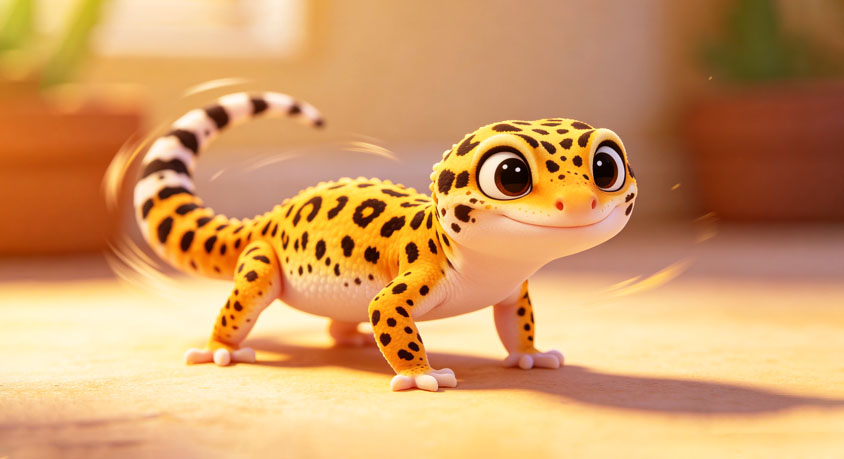
Challenge the conventional wisdom: Leopard geckos wag their tails for three reasons – and none of them mean “pet me.” A slow, side-to-side tail wave is a predator warning. A fast, vibrating tail tip is hunting excitement (usually aimed at food). A tail held straight up and shaking is a defensive “look at my bright tail – eat this instead of my head.”
If your gecko wags at you, not at food, you are the threat.
Most owners try to handle their new gecko within the first week. The gecko wags. The owner thinks “she just needs to get used to me.” They keep reaching in.
For the first 14 days after bringing a gecko home, do not handle her at all. Only open the tank to change water, spot-clean, and offer food. Let her learn that your hand does not equal danger.
After two weeks, start placing your flat hand inside the tank for 5 minutes daily – no moving toward her. Let her approach or ignore you.
A cold gecko is a slow, stressed gecko. Use a reptile temperature gun to check surface temps. Basking spot: 90-93°F. Warm side: 88-90°F. Cool side: 75-80°F. A gecko who is too cold cannot move away from you – so she wags and may drop her tail in panic.
If your gecko wags every time you approach, look at her tank setup.
Leopard geckos need a humid hide to shed properly. Without one, shedding gets stuck on toes and eyes. The pain and discomfort make them constantly defensive – and more likely to wag and drop tails.
A leopard gecko moist hide (plastic container with damp paper towels or sphagnum moss) placed on the warm side creates 70-80% humidity inside. Change the moss weekly to prevent mold.
A gecko in a bare tank feels exposed – like a mouse in an empty room. She will wag at any movement because she has nowhere to hide.
The fix: Add at least three hides (warm, cool, moist). Add fake plants, cork bark, or flat rocks. A gecko who can move from hide to hide without being seen will wag much less.
Leopard geckos sometimes see their own reflection in glass and mistake it for another gecko. Territorial wagging follows. Cover three sides of the tank with opaque backgrounds or paper.
Many owners think “I’ll just grab her before she gets too stressed.” This is how tails drop. A grabbed gecko will release her tail as a decoy.
If your gecko is wagging at you (slow, sweeping), offering food rewards the stress behavior. Wait until she stops wagging and relaxes before feeding.
Loud noises and vibrations terrify geckos. They may drop their tail from shock alone.
A fast, vibrating tail tip while your gecko stares at a cricket or mealworm is completely normal. That’s the “I’m about to pounce” signal. It is not stress. It is excitement.
Let her hunt. After she eats, the wag stops.
A gecko who hunts poorly or wags at food but doesn’t strike may have metabolic bone disease (calcium deficiency). Dust insects with calcium powder without D3 at every feeding (unless you use a UVB light, then use with D3 twice weekly). Weak geckos are nervous geckos – and nervous geckos wag more.