The hamster who runs all night: exercise or an obsessive loop?
- Quick Tags: hamster running wheel, stereotypic behavior, small pet stress signs, cage enrichment for hamsters
- Editor: Chloe Jones
- Updated: Aug,02,2026
- Views: 330.4k







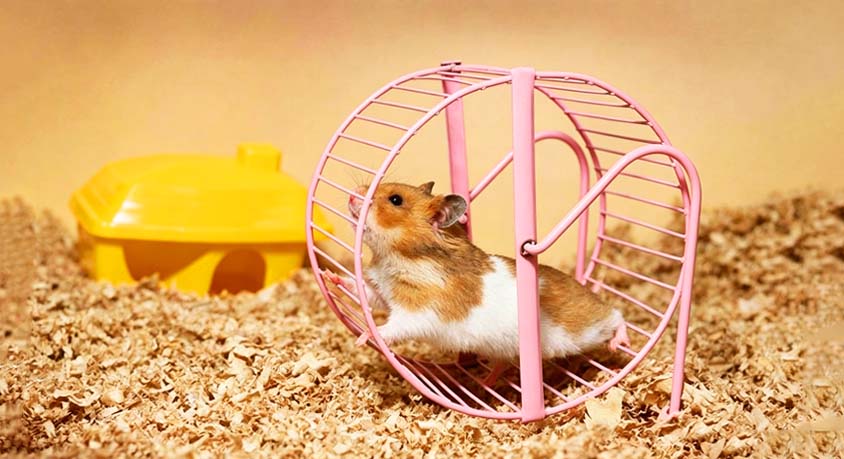
The clock reads 2:00 AM. You hear the familiar whir of the hamster wheel. Your robo dwarf, Pebble, has been sprinting for four hours. “Good,” you yawn. “He’s getting his exercise.”
But last week, Pebble started ignoring his food bowl. His fur looks ruffled. He flinches when you offer a seed. You wonder: is that wheel a gym or a prison?
Wild hamsters run miles each night foraging. A wheel mimics that. But here is the question: can a hamster run compulsively – not for joy, but because his cage is so bare that the wheel is his only escape?
Research shows that when cages lack bedding depth and hiding spots, hamsters develop repetitive behaviors. Excessive running is a common stereotypic action – a sign of chronic stress.
One client had a Syrian who ran nine miles a night. She added six inches of bedding for burrowing. Within a week, his running dropped by half. He wasn’t an athlete. He was bored.
These common assumptions keep hamsters trapped.
Silence only means quiet hardware. A stressed hamster runs just as hard on a silent wheel.
In a well-designed cage with tunnels and chews, a hamster runs in short bursts. A hamster who runs for hours without interruption is not choosing – he is stuck.
These patterns are not normal.
A healthy hamster runs minutes, grooms, eats. A stressed hamster runs non-stop for hours, ignores food. If Pebble’s water level does not drop overnight, something is wrong.
Place broccoli near the wheel. A curious hamster pauses within seconds. A hamster who keeps running and ignores food is displaying compulsive behavior.
If your hamster also chews bars or hangs from the ceiling, those are additional stress signs. The cause is almost always a cage that is too small or too empty.
Flatten bedding across half the cage before bed. In the morning, look at footprints. A balanced hamster leaves trails between wheel, food, water, and hide. A stressed hamster leaves one deep track – wheel and nothing else.
You can transform a stressed runner within two weeks.
Provide at least six inches of paper-based bedding. Digging tunnel systems occupies hours of natural behavior. Many hamsters reduce wheel running by 60% after true burrowing depth.
Scatter food across the cage floor and bury some under bedding. Foraging gives the brain a job that is not running.
A too-small wheel forces the back to arch, causing discomfort. Syrians need 10-12 inches diameter; dwarfs need 8 inches.
A hamster who runs obsessively and loses weight may have parasites or dental disease. Weigh weekly. Sudden compulsive running in a senior hamster (over 18 months) could signal a neurological issue – call an exotic vet if paired with circling or falling.
I worked with a family whose dwarf hamster ran from dusk until dawn. No one slept. We added eight inches of bedding, a sand bath, and scattered food. The first night, he ran for two hours – then disappeared into his tunnels. He still used the wheel, but in happy bursts.
“I thought he was a machine,” his owner said. “He was a builder with no building site.”
Tonight, listen for the breaks. Watch for the burrow. If your hamster runs like his life depends on it, ask yourself: is that wheel a playground or a cage inside a cage? The answer is in everything else you give him.