Whale Eye Flicker: Why Does Your Dog's White Sclera Flash During Cuddles?
- Quick Tags: dog body language, whale eye dogs, stress signals dogs, canine fear response
- Editor: Editorial Team
- Updated: Jul,24,2026
- Views: 383.1k









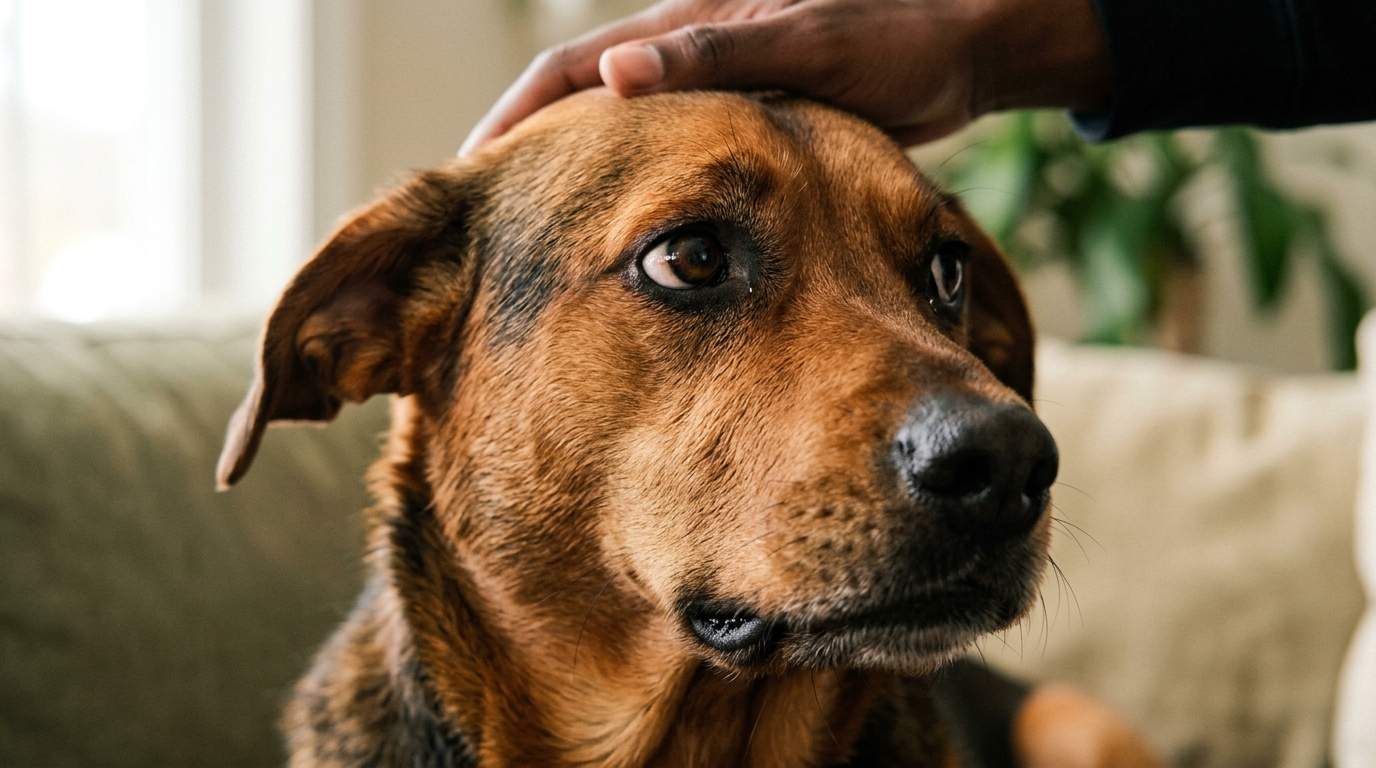
Imagine reaching down to stroke your dog's head, only to catch a fleeting glimpse of white around their eyes—a subtle "whale eye" that vanishes as quickly as it appears. This tiny physiological detail often goes unnoticed, yet it whispers volumes about your pet's inner world.
Dog body language experts recognize whale eye—when the whites of a dog's eyes become visible sideways—as a classic stress signal. Far from playfulness, this micro-action signals discomfort, challenging the common belief that all wide-eyed stares mean joy.
In my consultations worldwide, I've seen it in breeds like Golden Retrievers and senior dogs alike. It's not defiance; it's your dog's polite way of saying, "This feels off."
Whale eye occurs when a dog averts its gaze while keeping its head turned toward you, exposing the sclera. Picture little Luna, a shy rescue cat who mirrors this in felines—her eyes slicing sideways during unwanted pets.
Many owners misread whale eye dogs as "grumpy" or ready to snap, but science from animal behavior studies shows it's a freeze response rooted in canine fear response. Puppies flash it most during overwhelming greetings, while senior dogs use it when arthritis makes touch painful.
Consider Max, my client's energetic Labrador. He'd stiffen and show whale eye during belly rubs, not from dislike, but because it pressed his sore hips. Once we adjusted, his tail wagged freely.
Even in fun, overstimulation flips the switch. Dogs avert eyes to de-escalate, a survival instinct from wild packs.
Beyond whale eye, watch for lip licks or yawning in cats and exotic pets like ferrets. These cluster into reliable patterns, helping you intervene early.
For multi-pet homes, a parakeet's puffed feathers echo the same unease. Patience builds trust—no blame, just observation.
Start with consent: Let your dog approach first. Short, gentle sessions prevent whale eye triggers.
Use related tools like a calming pheromone spray during transitions. For puppies, pair with puzzle toys to redirect energy.
Huskies and herding breeds show it quicker due to high alertness. Slow your energy, speak softly.
Your awareness transforms these moments. Max now leans in eagerly, his eyes soft and trusting. You're not just reading dog body language—you're mending invisible wounds.
With these insights, every pet—dog, cat, or niche friend—feels seen. Confidence grows for both of you.